How fast will a Level 2 charger fill my EV?
A Level 2 charger adds roughly 25–44 miles of range per hour depending on the amperage we install — 48-amp hardwired at the top end, 32 amps on a plug-in unit. Compare that to the 3–4 miles an hour a wall outlet trickles in. Plug in at dinner, and every morning the car is full. That's the whole point: overnight charging, tuned to what your panel can safely deliver.
Can my panel handle it — or am I facing a panel upgrade?
Usually, yes it can. We run a load calculation first, then set the charger to the exact tier your panel safely supports: 48, 40, or 32 amps. If your panel is older or already working hard, smart load-management equipment watches your home's real-time load and tunes the charge around it — most older Austin homes charge without an upgrade. If more capacity truly is the right call, you get that price in writing first, and the decision stays yours.
Which charger should I buy — or do you supply one?
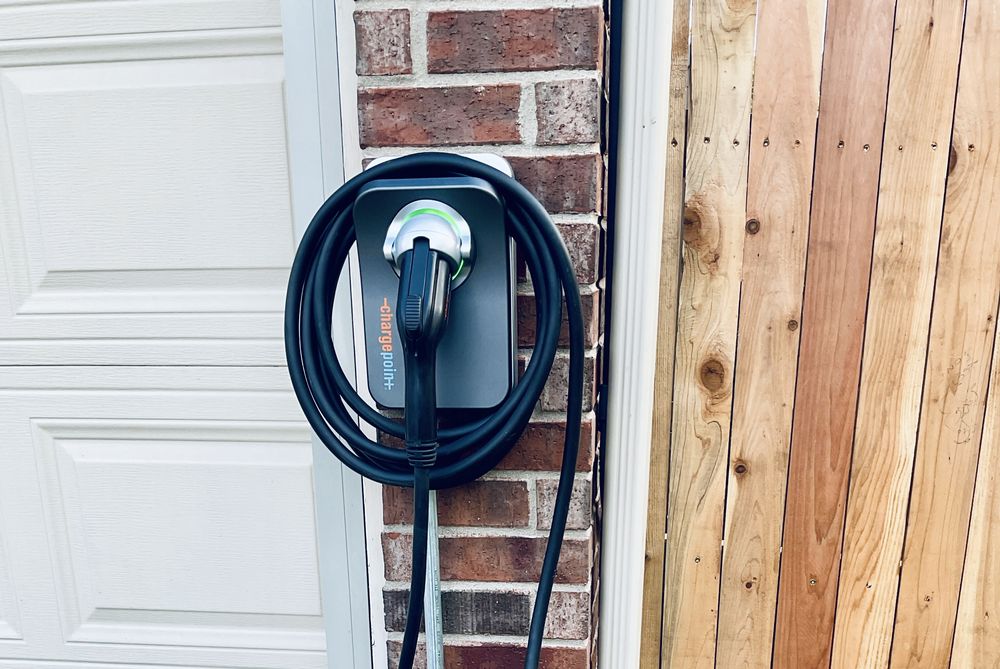
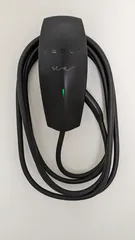
We install the charger you bought — ChargePoint Home Flex, Wallbox Pulsar Plus, Emporia, Tesla Universal, JuiceBox, or the unit your carmaker ships (Ford Charge Station Pro included). Haven't picked one? Tell us your car and how you park and we'll recommend the right unit for your panel, your Wi-Fi and your app. You purchase the charger yourself, so the manufacturer's warranty is registered in your name — then we build the circuit and make it work.
Hardwired, or a NEMA 14-50 outlet?
Hardwired runs the full 48 amps — the fastest home charge — with ground-fault protection built into the charger. A NEMA 14-50 outlet caps most cars around 32 amps but lets you unplug the unit and take it when you move; today's code also requires a special GFCI breaker for the outlet, which adds cost and is famous for nuisance-tripping with some chargers. We'll give you the price for both at your walk-through. Either way, Austin requires a permit and inspection — included in how we work.
My car uses the Tesla plug (NACS) — does that change the install?
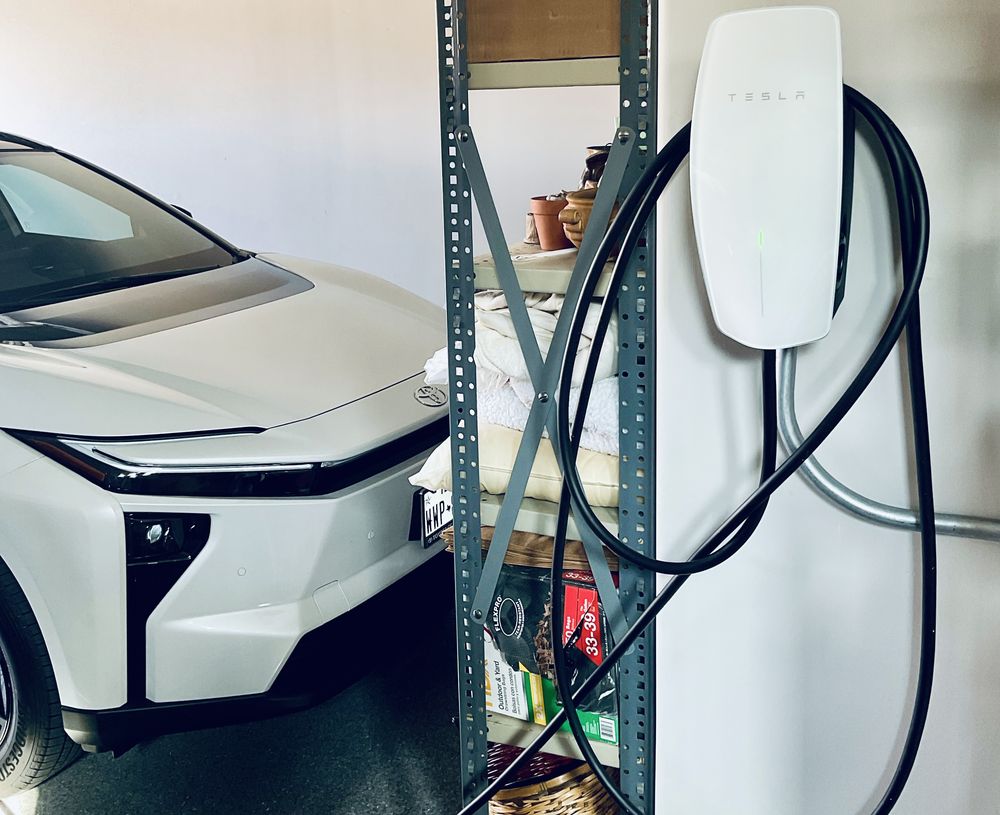
Not the electrical work — the circuit, breaker and wire are the same. Ford, GM, Rivian, Hyundai and Kia have all moved to the NACS plug, and most ship an adapter for J1772 chargers in the meantime. If your household mixes plug types, the Tesla Universal connector covers both NACS and J1772 natively — one unit charges any EV in the driveway. Tell us what you drive at the evaluation and we'll spec the connector that fits.
Can it be installed outside, in the Texas heat?
Yes. The chargers we install carry weather-rated, sealed enclosures built for exactly that — an Austin August included. Garage wall or driveway post, we mount it where you actually park, with the cable reaching the charge port without stretching across a walkway.
Do I need a permit in Austin?
Yes — the city requires an electrical permit and inspection for a hardwired charger, and Austin Energy requires that permit for the rebate too. We pull it, we meet the inspector, and it's part of the price we quote. Nothing for you to chase.
What does EV charger installation cost in Austin?
It starts at $889 — a standard installation within five feet of your panel, permit included. Most Austin installs land between $889 and $4,400. What moves the number: distance from your panel to where you park (a long run can reach 200 feet), the amperage you want, hardwired versus plug-in, and your panel's capacity. You'll know your exact number before we start — a written flat-rate proposal from your complimentary walk-through, and Austin Energy may rebate up to half.
Do you set up the Wi-Fi and the app when the install is done?
Yes — commissioning is part of every install. Before we leave, we connect your charger to your home Wi-Fi, register it so it receives firmware updates, and help you pair it in its app — ChargePoint, Wallbox, Emporia, Tesla, or FordPass — so scheduled off-peak charging and charging history work from day one. Worth knowing: many chargers join 2.4 GHz networks only; if your router combines bands, we'll get it connected before we go.
We have two EVs. Do we need two circuits?
Not necessarily. Several chargers we install can share one circuit intelligently — two units splitting the available power so both cars charge overnight without doubling the electrical work. Where sharing isn't the right fit, we'll price a second circuit sized with room to grow. Tell us both cars at the walk-through and we'll design for the driveway you have.