On this page +
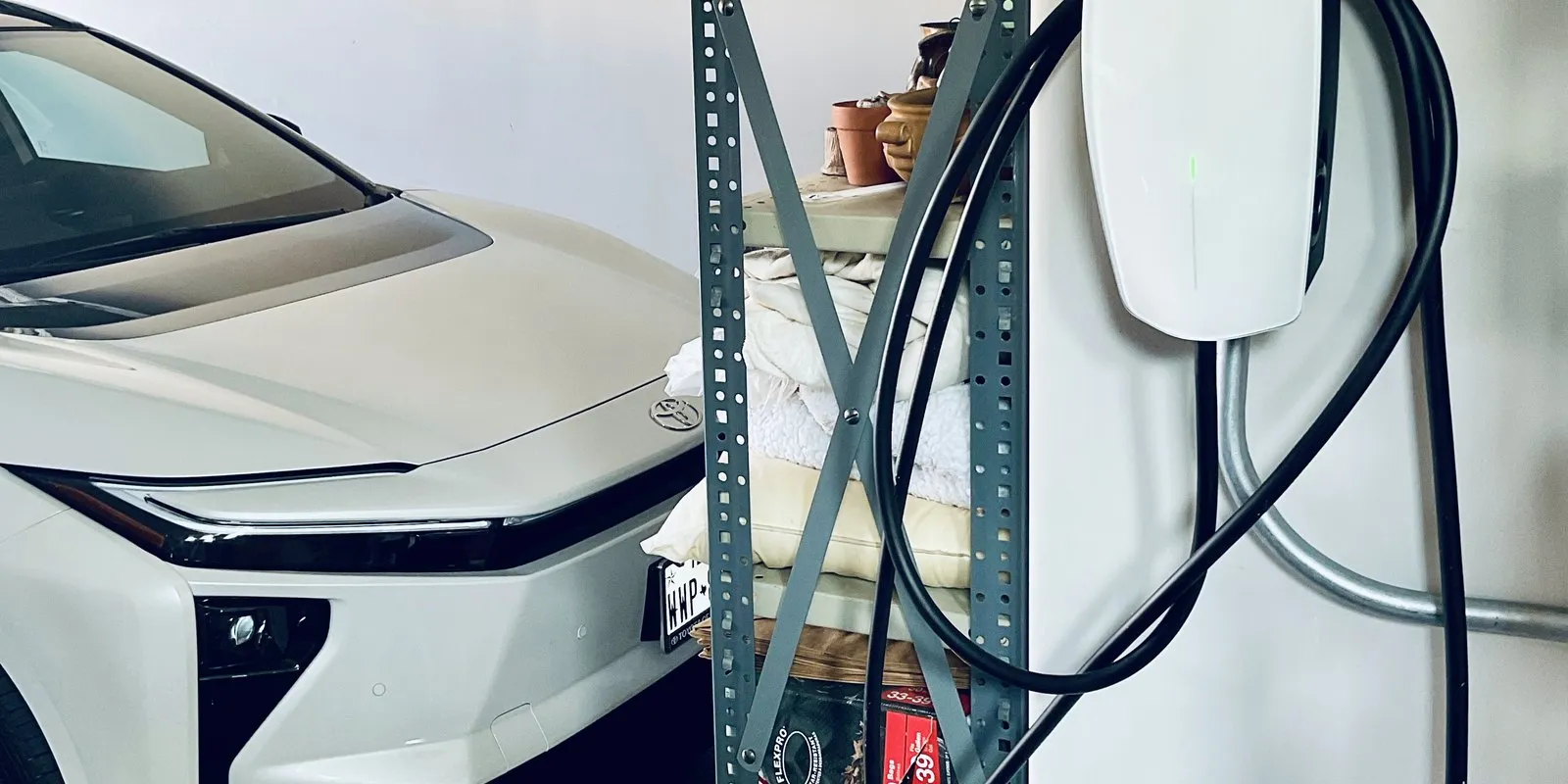
A straightforward Level 2 home charger install in Austin typically runs $500–$1,500 when your panel has spare capacity and the charger sits close to it. Most real installs land $1,000–$2,500. A complex job — a long wire run, an outdoor or detached-garage location, or conduit through finished walls — runs $2,000–$4,500+. And if your panel is full or your home still has 100-amp service, a panel upgrade to make room adds $1,500–$4,000+ on top. The charger location and your panel's spare capacity are what actually move the price — not the charger's sticker. Below: every cost driver, what's Austin-specific, and the rebates that bring it down.
Why “how much does it cost” doesn’t have one answer
Every generic article gives you a national range and calls it a day. The truth is that two houses on the same Austin street can get wildly different quotes for the identical charger — because the price isn’t really about the charger. It’s about the distance from your electrical panel to where you park and whether your panel has room to add a 240-volt circuit at all.
A garage with the panel mounted right on the wall behind the parking spot? Cheap and quick. A detached garage 60 feet across the yard, with a panel that’s already full, in a 1970s home still on 100-amp service? That’s a different project entirely. Same charger, very different bill.
So let’s break down what actually drives the number — then you’ll be able to look at your own garage and roughly predict where you land.
The charger is the easy part — your panel and the wire run set the price. Two identical chargers can cost wildly different amounts depending on the house.
The seven things that decide your price
The single biggest variable. Every foot of wire and conduit between your panel and the charger location adds material and labor. A charger 5 feet from the panel is cheap; one 50 feet away — especially through finished walls or across an attic — is the line item that surprises people.
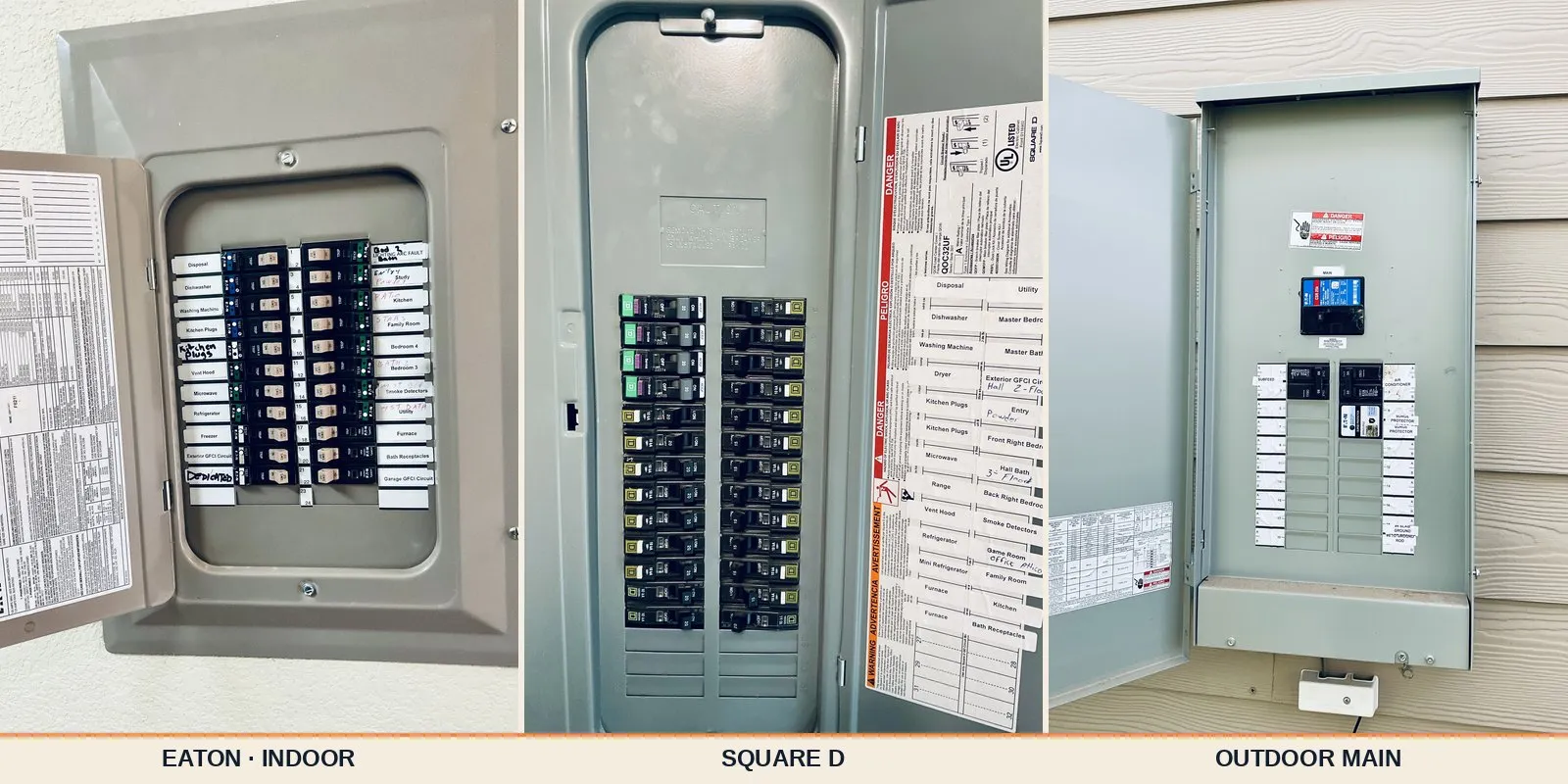
A Level 2 charger needs a dedicated 240-volt circuit, usually 40–60 amps. Your panel needs both an open breaker slot and enough overall capacity to add that load. Many Austin homes have neither — which leads to #3.
This is the big one. If your panel is full, or your home is on 100-amp service (common in central-Austin homes built before the ’90s), you may need a service upgrade to 200 amps before a charger is even safe to add. That’s a real project — $1,500–$4,000+ depending on the home — but it’s also an upgrade that benefits the whole house, not just the car. (More on the older-Austin-home angle below.)
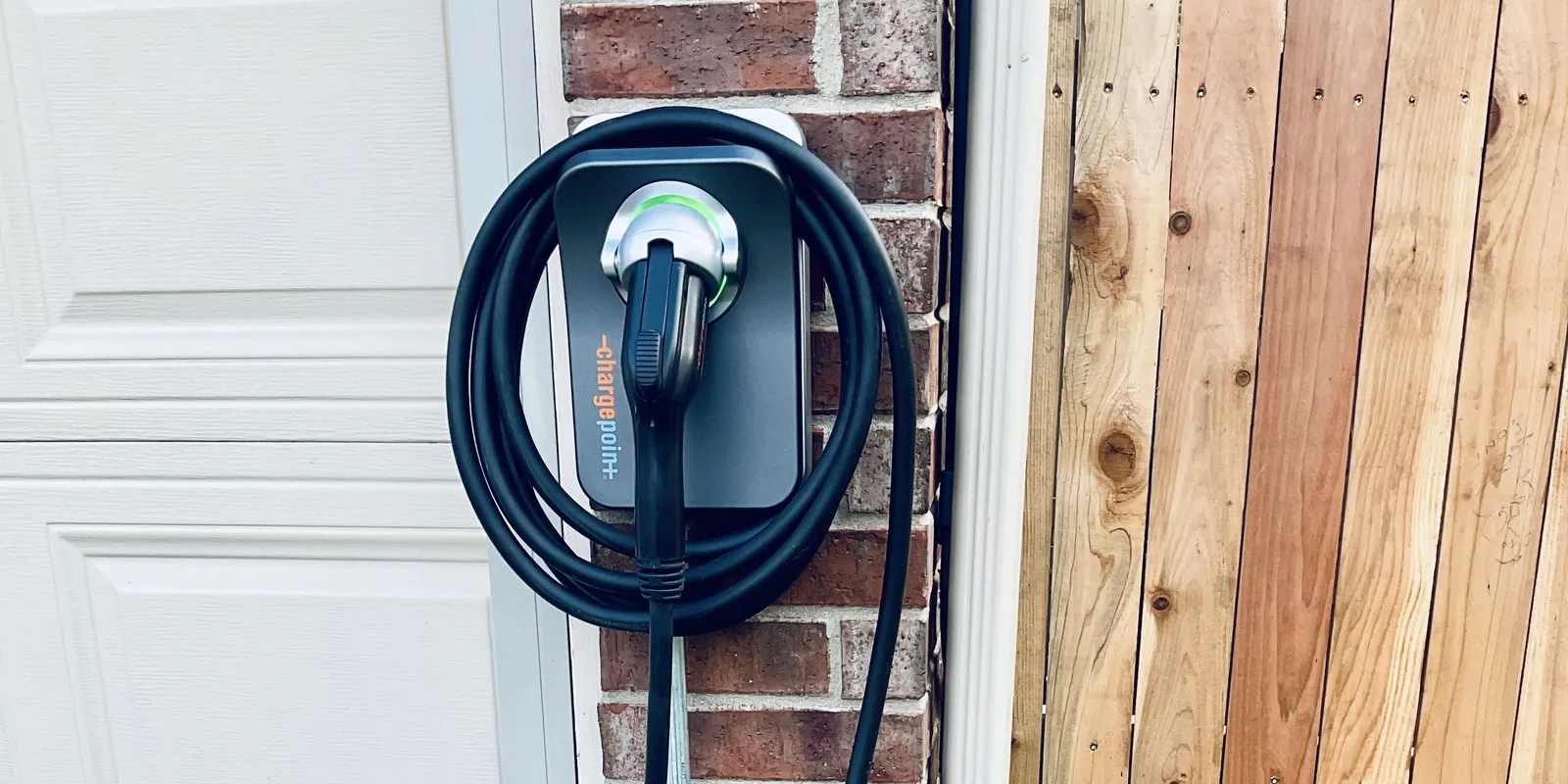
You can hardwire the charger to the wall, or install a NEMA 14-50 outlet and plug it in. Our installation labor is the same either way — what changes is the breaker. A plug-in outlet requires a GFCI breaker by code, which costs more than the standard breaker a hardwired charger uses, so the 14-50 route usually runs a little more, not less. Hardwiring also supports higher continuous output and is sometimes required outdoors; plug-in lets you take the unit with you and swap it later.
An outdoor charger or a detached garage means weatherproof equipment, often a trench or an underground/overhead run, and sometimes a sub-panel. Each adds cost. An attached garage with an interior wall run is the budget-friendly scenario.
Surface-mounted conduit along an unfinished garage wall is fast. Fishing wire through finished drywall, brick, or a two-story exterior is slow and skilled labor — and labor is most of the bill.
EV charger installs in the Austin area require a permit and inspection. It’s a real, correct cost (and the thing fly-by-night installers skip — which comes back to bite you at resale and on your insurance). A proper install includes pulling the permit and passing inspection.
Typical Austin price scenarios
Rough market ranges — your home decides where you fall:
| Scenario | Typical range |
|---|---|
| Simple: panel has capacity, charger within ~10 ft of panel, attached garage | $500–$1,500 |
| Average: moderate wire run, dedicated circuit added, attached garage | $1,000–$2,500 |
| Complex: long run, outdoor/detached, conduit through finished walls | $2,000–$4,500+ |
| Add-on: panel/service upgrade required first (100A → 200A) | +$1,500–$4,000+ |
These are market ranges to set expectations, not a quote — the only way to know your number is to look at your panel and your parking spot, which is exactly what the visit is for.
The very-Austin part: old homes, new garages, and a city full of EVs
Austin is one of the densest EV markets in the country — Tesla builds them here, and the adoption curve in neighborhoods like Mueller, Circle C, Steiner Ranch, and the newer east-side build-outs is steep. But the homes those EVs park in are all over the map:
- Older central-Austin homes (Hyde Park, Rosedale, Crestview, Tarrytown, older South Austin): often on 100-amp service with full panels. These are the homes where “just install a charger” turns into “you need a panel upgrade first.” It’s not an upsell — a 100-amp panel physically can’t safely carry a modern household plus a 48-amp car charger. Knowing that up front saves you a surprise.
- Newer build-outs (Mueller, Easton Park, Circle C, Goodnight Ranch): usually 200-amp service with room to spare, attached garages, panels often already in or near the garage. These are the clean, lower-cost installs — sometimes the simplest scenario in the whole table above.
- Detached garages and casitas (common in older Austin lots): the trench-or-overhead run is the cost driver here.
The takeaway: in Austin, the age and service size of your home predicts your charger cost more than anything else.
Rebates and credits that bring it down
This is where local knowledge beats a national blog post:
- Austin Energy rebate. If you’re an Austin Energy customer, there has historically been a rebate toward a qualifying Level 2 home charger install (often a few hundred dollars, with enrollment in their managed-charging program). Amounts and requirements change, so confirm the current offer and eligibility before you buy — but for many Austin homeowners it meaningfully lowers the net cost. (If you’re served by Pedernales Electric Cooperative or another provider instead, check their program — several Texas co-ops offer their own EV incentives.)
- Federal tax credit (30C). The federal Alternative Fuel Vehicle Refueling Property Credit covers 30% of a home charger install, up to $1,000 — but only for homes in qualifying (low-income or non-urban) census tracts, and under the 2025 federal budget law it ends for installs placed in service after June 30, 2026. If a charger is on your list, that window is closing fast — check your address against the IRS rules before you count on it.
We’ll point you to the current programs during the visit so you’re not leaving money on the table.
What a proper install includes (and what cheap ones skip)
The difference between a $700 “deal” and a done-right install usually isn’t the charger — it’s what’s around it:
- A dedicated, correctly-sized circuit (not tapped off an existing one)
- The right wire gauge for a continuous 240-volt load (EV charging runs for hours — wire that’s fine for intermittent loads can overheat under continuous draw)
- A permit and inspection on file
- Weatherproof equipment if it’s outdoors, and a tidy, code-compliant run
- Top-tier equipment, installed with up to a 5-year workmanship warranty on the work itself
Skipping the permit, undersizing the wire, or hanging a charger off a circuit that can’t support it is how you end up with a tripping breaker, a charger that throttles itself, or — worst case — overheated wiring behind the wall.
Why the visit starts with your panel
You now know the punchline: the charger is the easy part. The cost and the safety both live in your panel and your wire run. A DC Electric licensed electrician looks at your panel’s capacity, your parking spot, and the path between them, tells you exactly what your install takes — and whether a panel upgrade is genuinely needed or not — before any work begins. In a newer home it’s often a simple, same-table install; in an older one, the straight answer might be “let’s make room first.” Either way, you’ll know your real number.
Thinking about a home charger? Call (512) 954-4782 or book online and our office will get back to you to schedule a look. We serve homes across Greater Austin, Monday through Friday.
If you're in doubt, call DC Electric out.
Whatever the electrical question, a Lead Technician comes out, does a thorough check, and gives you a clear course of action with a guaranteed repair or fix — and an upfront flat-rate price before any work begins.
How to keep your EV charger install cost down
- Park near your panel. Every foot of wire and conduit adds cost — the shortest run is the cheapest install.
- Check your panel's capacity first. A full panel or 100-amp service is what turns a cheap job into a big one.
- Right-size the circuit. Match the charger's amperage to your car's real charging speed instead of over-building.
- Bundle a panel upgrade if you need one. Doing it in the same visit is cheaper than two separate trips.
- Check rebates before you buy. Austin Energy and the federal 30C credit can lower the net cost — confirm current eligibility first.
We believe your home should have safe, reliable electrical wiring to protect your family's well-being.
Common questions
How much does it cost to install a Level 2 EV charger at home in Austin?
Why is my EV charger quote higher than my neighbor's?
Do I need a panel upgrade to install an EV charger?
Is hardwired or a NEMA 14-50 outlet cheaper?
Are there rebates for EV charger installation in Austin?
Do I need a permit to install an EV charger in Austin?
Standing By to Take Your Call
Book online any time, or give us a call and we'll get you scheduled — existing customers reach us 24/7.