On this page +
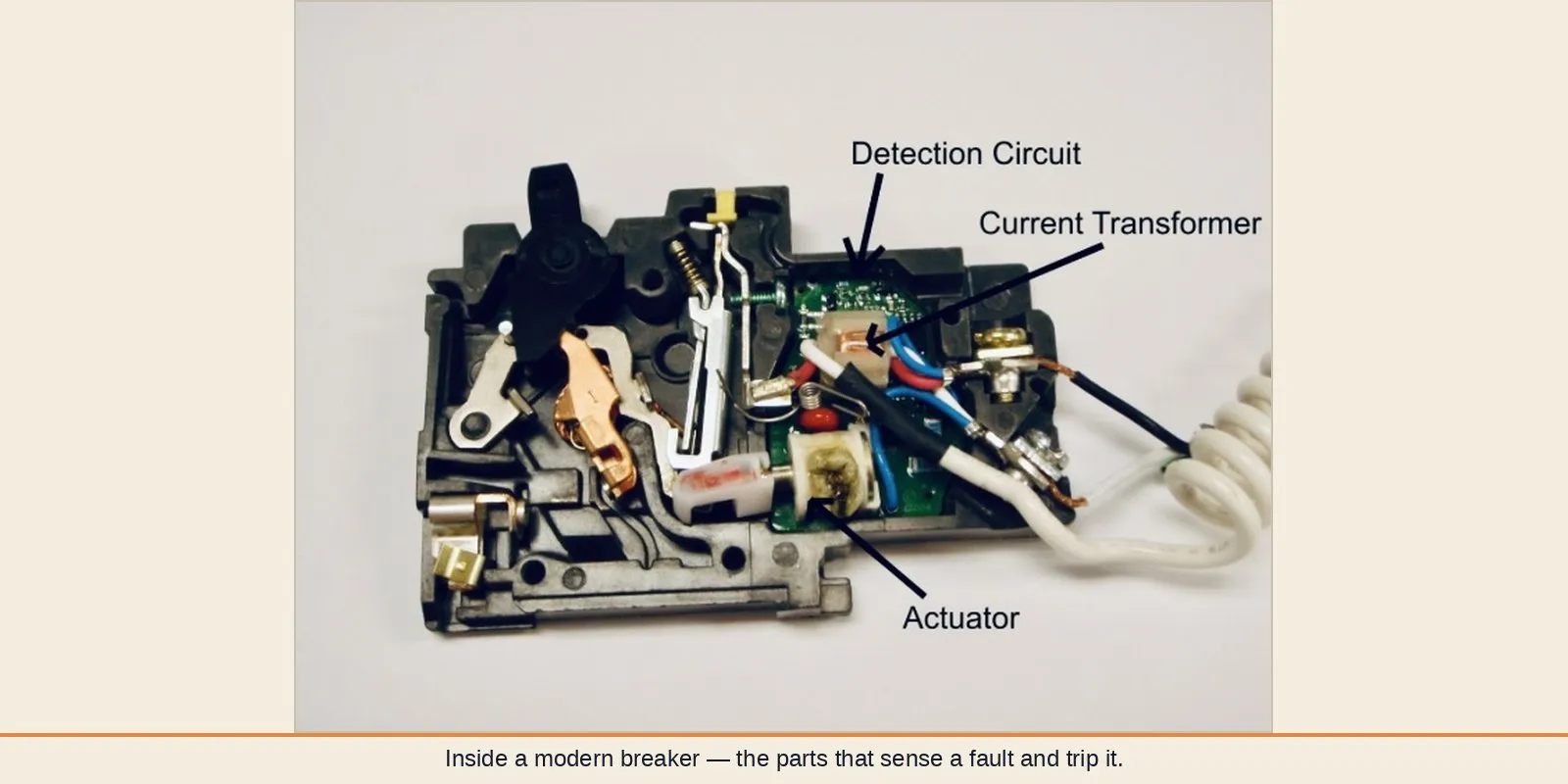
A breaker trips because it's doing its one job — cutting power before a circuit overheats. There are really only four reasons it happens: the circuit is overloaded (too much running at once), there's a short circuit (a hot wire touching neutral or ground), there's a ground fault (current leaking where it shouldn't), or the breaker or panel itself is failing. If it trips once and resets fine, you probably overloaded it. If it trips again the instant you reset it, or trips with nothing plugged in, stop — that's the circuit telling you something is wrong inside the wall, and in an older Austin home it's worth a look before it becomes a bigger problem.
First — your breaker is the hero here, not the villain
It’s a frustrating sound: that hard clunk, and half the kitchen goes dark in the middle of cooking. But the breaker just did exactly what it’s built to do. It noticed more current flowing than that circuit can safely carry, and it shut the power off before the wire behind your drywall got hot enough to be a problem.
So the question isn’t really “how do I make the breaker stop tripping.” It’s “why does this circuit keep asking for more than it can give?” Answer that, and the tripping takes care of itself. Ignore it — or just keep flipping the breaker back on — and you’re overriding the one device in your house designed to prevent an electrical fire.
Here’s how to read what yours is telling you.
A tripping breaker is a symptom, not the problem. The real job is finding what's overloading or faulting that circuit — which is exactly what a diagnosis visit is for.
A very Austin example
Picture a 1962 ranch in Allandale or Crestview — the kind of solid mid-century house all over north-central Austin. The kitchen still runs on the circuits the original builder ran, sized for a 1962 kitchen: a fridge, a couple of lights, maybe a toaster.
Now it’s July. It’s 104° outside. There’s a window AC unit humming in the breakfast nook, the microwave is reheating coffee, and someone just dropped chicken into the air fryer. Clunk. Dark kitchen.
Nothing is broken. That circuit was never built to run a modern kitchen and a window unit at the same time, and a Texas summer is when the math finally tips over. This is the most common tripping breaker we see in older Austin homes — and it’s also the most misunderstood, because the homeowner assumes something failed when really the house is just telling you its wiring is from a different era of how families use electricity.
The four reasons a breaker trips — and which one is yours
What’s happening: more amps are flowing through the circuit than the breaker’s rating (usually 15 or 20 amps in a home). Run a hair dryer and a space heater on the same bathroom circuit on a cold January morning and you’ll find this fast.
Is this you? It trips when you turn on a specific combination of things. Unplug something, reset the breaker, and it holds. It often shows up in summer (AC) or winter (space heaters) — the seasons when we ask the most of our circuits.
Safe to handle yourself: Yes. Spread the load — move the air fryer or space heater to a different circuit (a different room, ideally). If you’re constantly juggling what you can run at once, that’s the circuit telling you it’s time for a dedicated line. That’s an easy add for an electrician and it ends the daily annoyance for good.
What’s happening: a hot wire is touching a neutral or another hot wire directly. Current takes the shortcut, surges, and the breaker trips hard and instantly.
Is this you? It trips the moment you reset it, sometimes with a pop, sometimes a faint burning smell, occasionally a scorch mark or discoloration at an outlet or switch. A specific appliance might trip it every time it’s plugged in (that’s a short in the appliance cord, not your wiring — toss the appliance).
Safe to handle yourself: Only the appliance test. If unplugging everything on that circuit still trips the breaker, the short is in your wiring or a device in the wall. Leave that breaker off and call. A short circuit is heat looking for a place to happen.
What’s happening: electricity is escaping the circuit and finding an unintended path to ground — often through water, or a person. This is what GFCI outlets and breakers exist to catch, and they’re required by code in kitchens, bathrooms, garages, laundry rooms, and outdoors.
Is this you? A GFCI outlet (the kind with the TEST/RESET buttons) keeps tripping, especially near water. An outdoor outlet trips after rain. A bathroom outlet won’t stay on.
Safe to handle yourself: Press RESET on the GFCI once. If it won’t hold, or trips again quickly, don’t keep forcing it — a ground fault is the failure mode most likely to involve a shock, and a tripping GFCI near water is doing the most important job in your house. Get it diagnosed.
What’s happening: breakers are mechanical. They wear out. A breaker that’s tripped thousands of times, or has been overheated for years, can start tripping at lower and lower loads — or worse, stop tripping when it should.
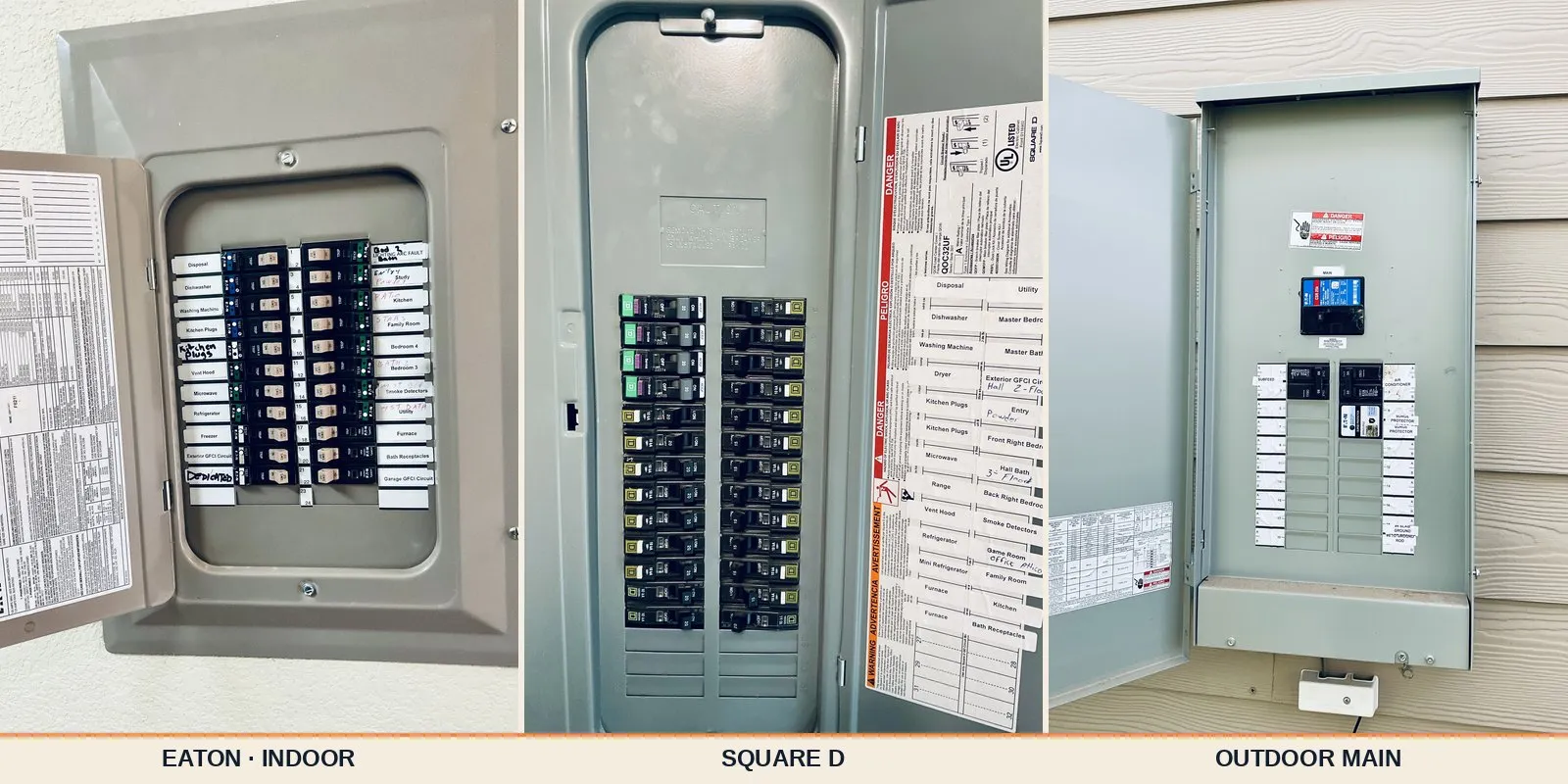
Is this you? An old breaker that trips for no reason you can find, gets warm to the touch, or sits in a panel with a brand name like Federal Pacific (FPE / Stab-Lok) or Zinsco. If that describes your panel, the next section is the most important part of this whole article.
The part that matters most in older Austin homes
A lot of central Austin’s housing stock — Hyde Park, Rosedale, Brentwood, parts of Tarrytown, the older pockets of South Austin — was wired in the 1950s through the 1970s. A meaningful share of those homes still have their original panels, and two brands are widely documented as dangerous: Federal Pacific Electric (FPE) Stab-Lok panels and Zinsco panels.
The problem with both is the opposite of the one you’d expect. The risk isn’t that they trip too often — it’s that their breakers have a documented history of failing to trip when they should. A breaker that doesn’t trip on a real fault is no protection at all; it lets the wire keep heating. That’s why many electricians recommend replacing these panels regardless of whether they’re currently giving you trouble.
So if your breaker is tripping and you have one of these panels, you actually have a clue worth following — and if your breaker never trips but you have one of these panels, that may be the more concerning sign. Either way, knowing what’s in your panel is worth more than any single breaker reset. (We cover what to look for, and what a replacement involves, on our panel upgrade page.)
Two more things common in older Austin homes that drive tripping:
- Undersized service. Many of these homes were built with 60–100 amp service. A modern household — EV charger, heat pump, induction range, home office — wants 200. When the whole house is fighting over too little capacity, breakers trip.
- Two-prong outlets and modified wiring. Decades of DIY additions and “just tap off this circuit” fixes leave older homes with circuits doing jobs they were never meant to.
What about newer Austin homes?
If you’re in Mueller, Easton Park, Circle C, or one of the newer build-outs, your tripping is usually a different animal. These homes have AFCI breakers (arc-fault) required by modern code, and they can be sensitive — a cheap power strip, a motor in a vacuum, or a slightly loose connection can cause “nuisance” trips that feel random. It’s still worth diagnosing (a real arc fault is a fire risk and that’s exactly what the AFCI is catching), but the cause and the fix look different than in a 1960s ranch. The point: the same symptom means different things depending on the house, which is why a real diagnosis beats a guess.
Why our visit is built around the diagnosis
Here’s the part most “5 reasons your breaker trips” articles skip: the tripping is the symptom. The job is finding the cause. A breaker that trips in July might be a $0 fix (move the air fryer to another counter) or it might be the first visible sign of a panel that should have been replaced a decade ago. You can’t tell those apart from the kitchen — you tell them apart at the panel, with a meter, looking at the actual wiring.
When a DC Electric licensed electrician comes out, the visit starts with that diagnosis: what’s tripping, why, and what it means for the rest of the house. In an older home, that look often surfaces real issues worth addressing — not because we’re hunting for them, but because a 1962 panel running a 2026 household usually has them, and you’d rather know. You see what we find and what it’ll take to fix it, and you decide from there.
If your breaker keeps tripping, you don’t have to live with flipping it back on. Call us at (512) 954-4782 or book online, and our office will get back to you to schedule a visit. We serve homes across Greater Austin, Monday through Friday.
If you're in doubt, call DC Electric out.
Whatever the electrical question, a Lead Technician comes out, does a thorough check, and gives you a clear course of action with a guaranteed repair or fix — and an upfront flat-rate price before any work begins.
How to safely reset a breaker
- Turn off or unplug the devices on the dead circuit first.
- Find the breaker that's out of line with the others — sitting in the middle.
- Push it firmly to full OFF first, then back to ON. It won't reset from the middle.
- If it holds, you overloaded it. If it trips again immediately, leave it off and call.
- A burning smell, buzzing, or warmth from the panel or an outlet
- Scorch marks or discoloration around an outlet, switch, or the panel
- The breaker trips with nothing plugged in
- It trips immediately every time you reset it
- You have an FPE / Stab-Lok or Zinsco panel
We believe your home should have safe, reliable electrical wiring to protect your family's well-being.
Common questions
Is it dangerous to keep resetting a tripped breaker?
Why does my breaker only trip in the summer?
Can a breaker trip with nothing plugged in?
My panel says Federal Pacific or Zinsco. Should I worry?
Should I replace a breaker myself?
Standing By to Take Your Call
Book online any time, or give us a call and we'll get you scheduled — existing customers reach us 24/7.