On this page +
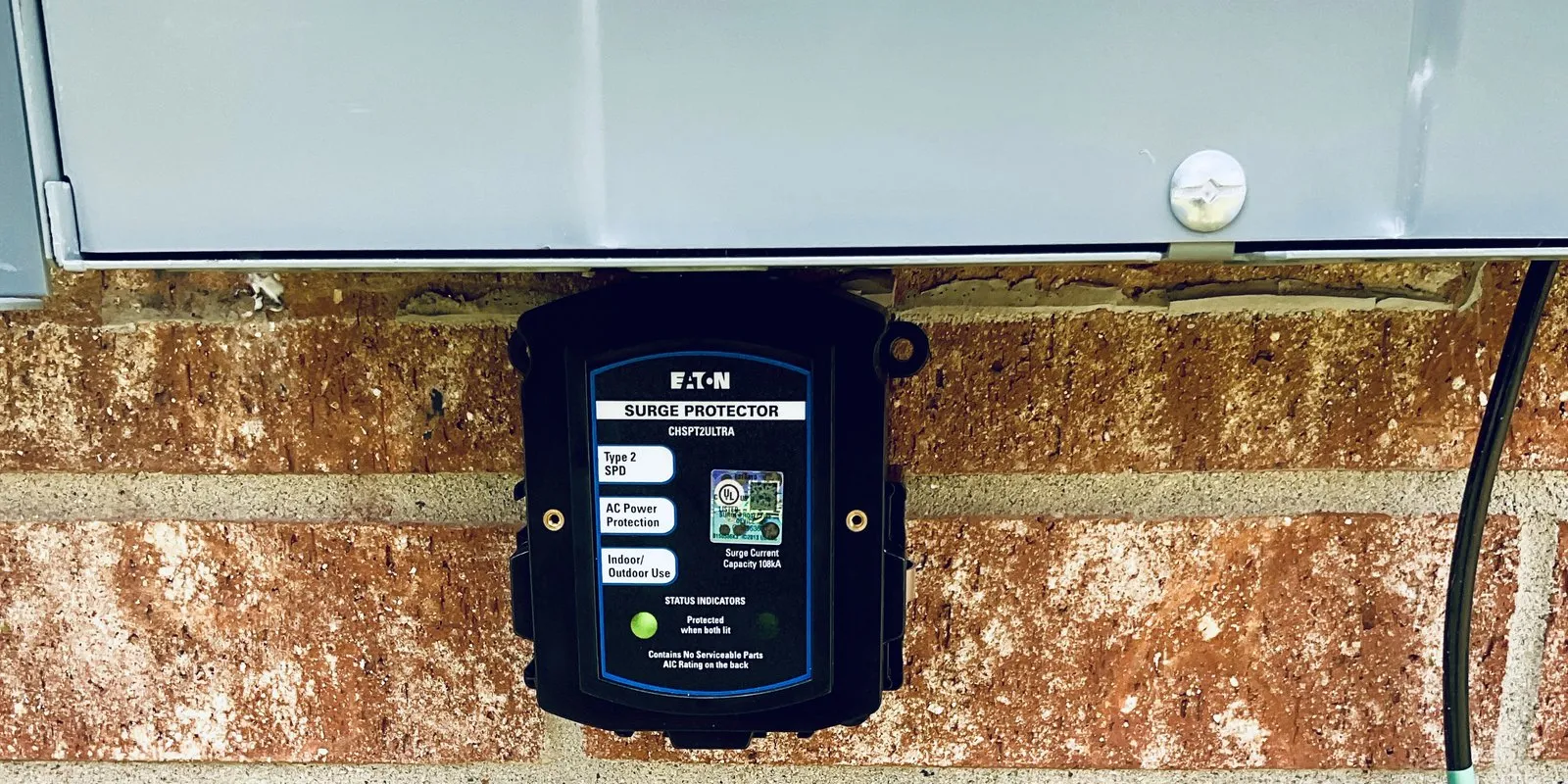
A whole-house surge protector installs at your main electrical panel and clamps down dangerous voltage spikes coming in from the grid or from nearby lightning before they reach the wiring and electronics inside your home. It's different from a power strip — those only protect what's plugged into them, after the surge is already in your walls. In Texas specifically, two things make it worth the cost: a grid that's proven it can be unstable (rolling outages, restoration surges), and a serious storm-and-lightning season. It won't stop a direct lightning strike, but for the everyday spikes that quietly degrade your HVAC, appliances, and electronics, it's one of the highest-value, lowest-fuss upgrades in the panel.
What a surge actually is (and why your house sees so many)
A power surge is a sudden spike in voltage — your home runs on about 120 volts at the outlet, and a surge briefly pushes that far higher. Big surges (a lightning strike, a grid event) can fry electronics instantly. But most surges are small and frequent, and that’s the part people miss: every day, dozens of little spikes pass through your wiring — from the AC compressor cycling, the well pump kicking on, the grid balancing itself. Each one shaves a little life off the electronics it touches. Your TV doesn’t die in a flash; it dies six months early.
A whole-house surge protector sits at the panel and catches both — the rare catastrophic spike and the daily small ones — diverting that excess voltage safely to ground before it gets into your home’s circuits.
A power strip protects one outlet; a whole-house unit protects the whole home — at the panel, before the surge ever reaches your circuits.
The very-Texas reason this matters more here
Most surge-protection articles are written for “anywhere.” This one isn’t. Two Texas realities change the math:
Texas runs on its own grid (ERCOT), and the last several years have made the case better than any salesperson could. Winter Storm Uri in February 2021 didn’t just cause outages — when power came back to neighborhoods in waves, those restoration events sent surges through homes, and plenty of Austin families discovered the damage only when the HVAC wouldn’t restart or the fridge board was dead. Summer brings the opposite stress: record demand, conservation alerts, and the brownouts and flickers that come with a grid running near its limit in 105° heat. Every one of those events is a surge risk.
The Austin area gets real thunderstorm seasons, and lightning doesn’t have to hit your house to hurt it — a strike on a nearby line, pole, or transformer can push a massive surge down the wires and straight into your panel. Spring and early-summer storm cells roll through hard and fast. A whole-house protector is the thing standing between that line surge and everything you own.
Put together: more grid volatility and more storm activity than most of the country. That’s the Austin case for surge protection in two sentences.
Power strips aren’t the same thing — here’s the difference
This is the distinction that matters:
- A power strip / point-of-use surge protector sits at the outlet and protects only what’s plugged into it — after the surge has already entered your home’s wiring. Fine for a desk; useless for everything hardwired.
- A whole-house surge protector sits at the main panel and stops the surge at the door — protecting the whole home, including the big stuff that isn’t plugged into anything.
That “big stuff” is exactly what costs the most to replace:
- HVAC system control boards (one of the most common and expensive surge casualties in Texas — and the worst possible time for it is mid-August)
- Major appliances — fridge, oven, washer, dryer — which are now full of sensitive electronics
- Your EV charger and the car’s onboard systems
- Smart-home gear — thermostats, panels, hubs, security, doorbells, cameras
- Computers, TVs, networking equipment
- Well pumps and pool equipment
The right setup is layered: a whole-house protector at the panel for the home, plus point-of-use strips on your most sensitive electronics for a second line of defense. The panel unit does the heavy lifting; the strips mop up.
What it won’t do (so you’re not oversold)
A whole-house surge protector is not magic, and we’d rather you know its limits:
- It won’t stop a direct lightning strike to your home. Nothing fully does — a direct hit is enormous. It dramatically reduces damage from nearby strikes and line surges, which are far more common.
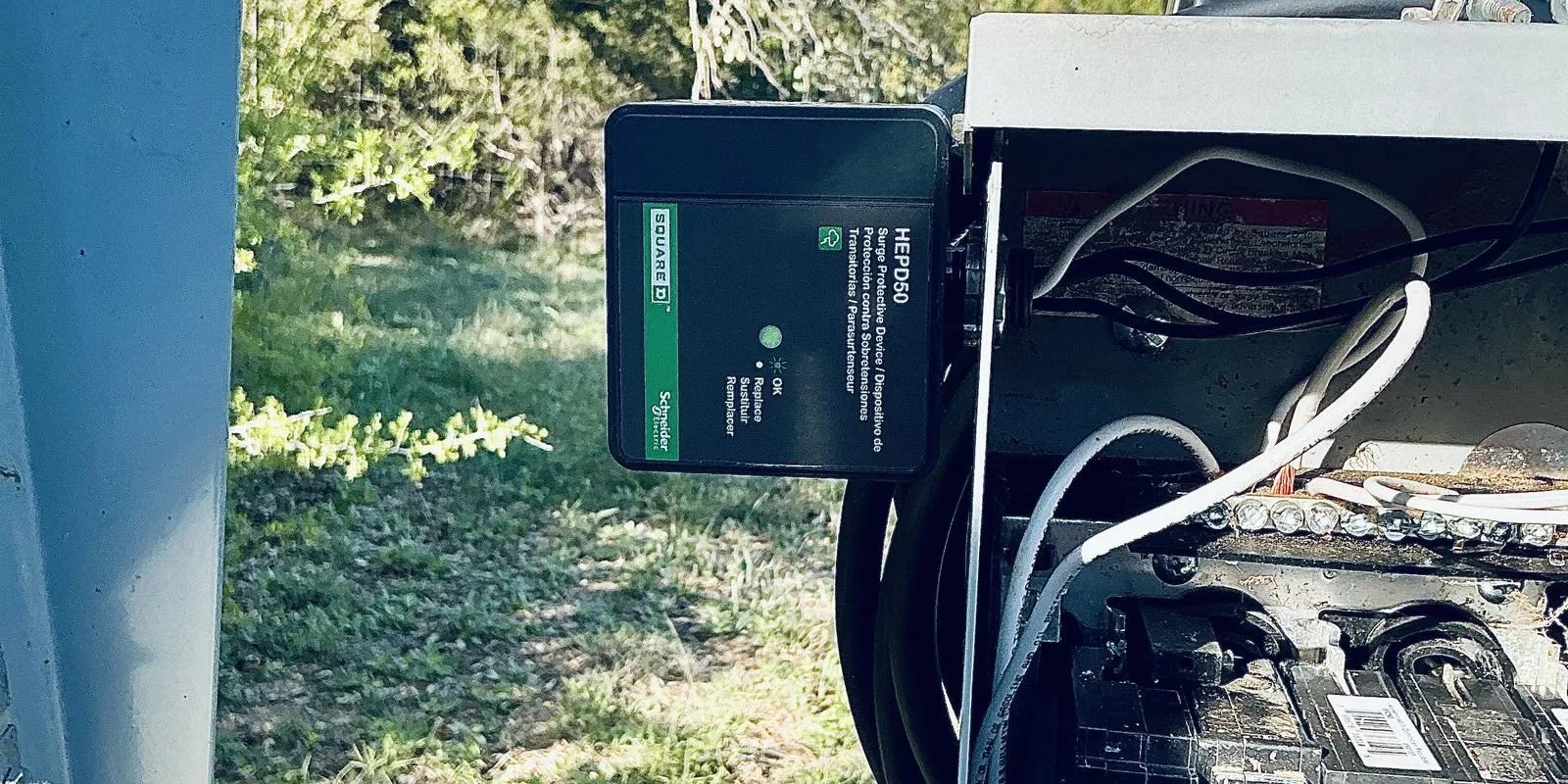
- It wears out. Surge protectors are partly sacrificial — they absorb energy, and over years (and after big events) they degrade. Quality units have an indicator light that tells you when they need replacing. Check it occasionally; a dark indicator means it’s done its job and needs swapping.
What installation actually involves
The good news: it’s one of the simpler panel additions. A licensed electrician installs the whole-house unit at your main panel — it’s a contained job, not a rewire. It does need to be wired into the panel correctly and bonded properly to ground to work, which is why it’s not a DIY item (you’re working inside an energized panel, and a poorly grounded surge device protects nothing).
The whole-house unit we install is top-tier equipment, backed by an insurance-backed connected-equipment warranty — coverage toward devices damaged by a surge that gets past the protector — plus a 10-year complimentary replacement on the protector itself. So even though the device is partly sacrificial, you’re not buying it again every time it does its job. We size it to your panel and your home’s load.
Since 2020, it’s not just smart — it’s code
This isn’t only a good idea anymore; it’s written into the electrical code. The 2020 National Electrical Code (NEC 230.67) began requiring a Type 1 or Type 2 surge protective device on the electrical service of every dwelling — including any time an existing service is replaced or upgraded. The reasoning the code panel gave is the same case we make above: modern homes are full of sensitive electronics and life-safety devices (AFCI and GFCI breakers, smoke and CO alarms) that a surge can take out, so protecting the service protects all of it. Texas builds to the NEC, so any panel or service upgrade we do brings this up to current code as part of the work.
Is it worth it for your home? A quick gut-check
It’s an easy yes if you have any of these:
- Central HVAC (Texas summers make that board failure expensive and miserable)
- An EV charger, solar, or a smart-home setup
- A lot of electronics or high-end appliances
- A well pump or pool equipment
- An older panel you’re already planning to upgrade (perfect time to add it)
- Simply living in the Austin area and remembering February 2021
The cost of one whole-house protector is usually a fraction of a single HVAC control board or a fried appliance — and it protects all of it at once, every day, for years.
How we approach it
We don’t bolt a surge protector onto a panel that has bigger problems. When we look at your home, we check the panel’s condition and grounding first — a surge device is only as good as the ground it diverts to, and in older Austin homes the grounding sometimes needs attention before the protector can do its job. Then we size and install the right unit, walk you through the indicator light and the layered approach, and you’re protected.
Want your home guarded against the next grid event or storm? Call (512) 954-4782 or book online and our office will get back to you to schedule. We serve homes across Greater Austin, Monday through Friday.
If you're in doubt, call DC Electric out.
Whatever the electrical question, a Lead Technician comes out, does a thorough check, and gives you a clear course of action with a guaranteed repair or fix — and an upfront flat-rate price before any work begins.
How to make whole-house surge protection actually work
- Install it at the main panel. That's what stops a spike before it reaches your circuits — not a strip at one outlet.
- Verify the grounding first. A surge device on a poor ground protects nothing; older Austin homes often need this checked.
- Layer in point-of-use strips. Add a second line of defense for your most sensitive electronics.
- Watch the indicator light. The unit is partly sacrificial — replace it when the light goes dark, especially after big storms.
We believe your home should have safe, reliable electrical wiring to protect your family's well-being.
Common questions
What does a whole-house surge protector protect?
Do I still need power strips if I have a whole-house surge protector?
Will a whole-house surge protector stop lightning?
Why does surge protection matter so much in Texas?
How long does a whole-house surge protector last?
Can I install a whole-house surge protector myself?
Is a whole-house surge protector required by code?
Standing By to Take Your Call
Book online any time, or give us a call and we'll get you scheduled — existing customers reach us 24/7.