On this page +
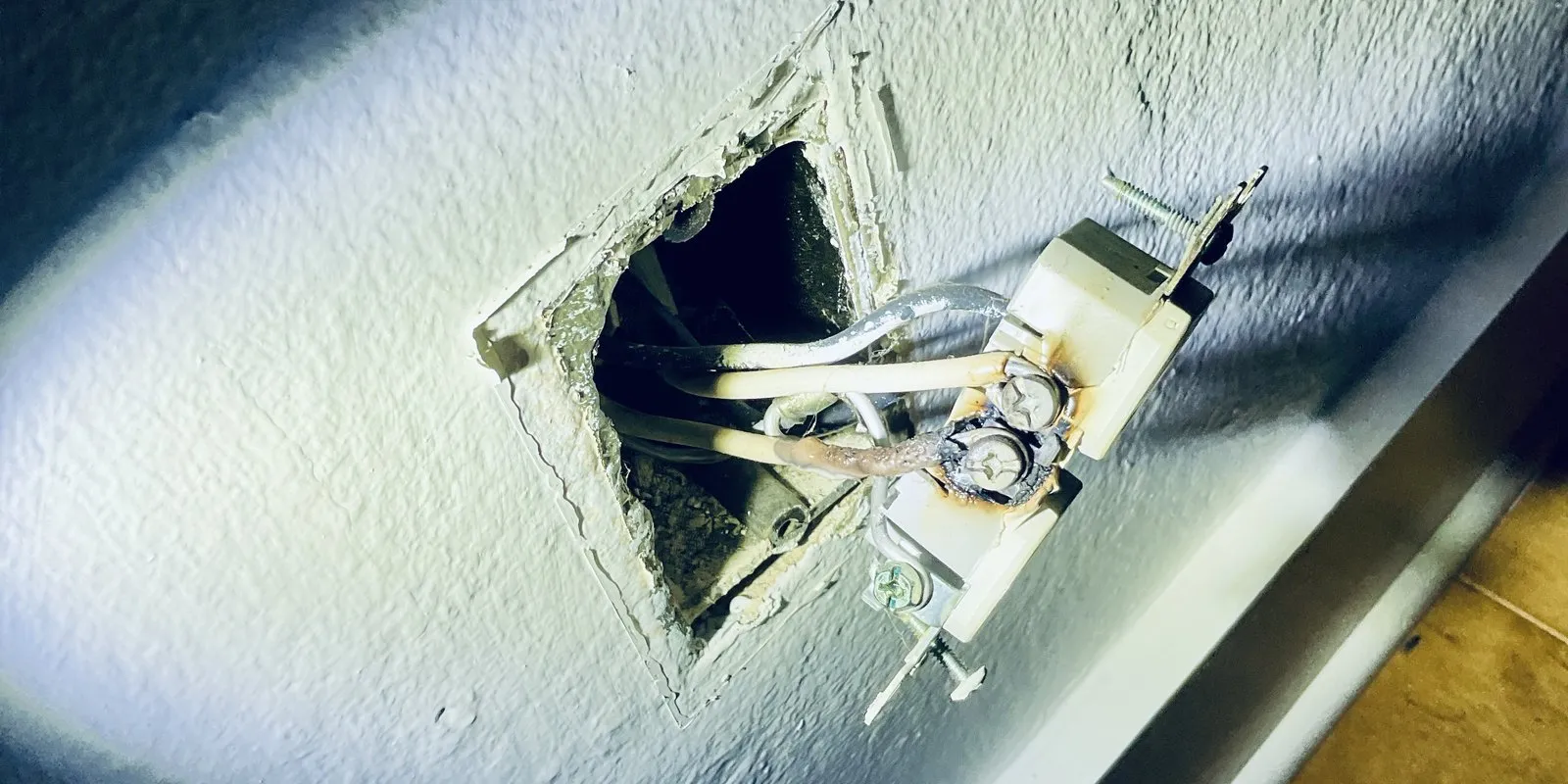
If you smell burning plastic, hot ozone, or a sharp 'dead fish' / ammonia odor near an outlet, switch, or breaker panel, treat it as an active electrical overheating event — even if the breaker hasn't tripped. Thermoset plastics inside outlets, wire nuts, and circuit breakers off-gas chemicals that smell remarkably like rotting fish when heated past 300°F. Shut off the affected circuit breaker immediately (never grab a melted plug with bare hands), leave that breaker OFF even after the smell fades, and if you see smoke, flames, or a hot/roaring main panel cover, evacuate and call 911 first.
Need a licensed Austin electrician? Explore our Austin Electrical Repair service, permits & upfront pricing →
First rule: trust your nose — “fishy” or “hot plastic” is an active electrical fault
At least twice a week during Austin’s peak July AC stretch and January cold snaps, a homeowner tells us: “I thought a mouse died behind the baseboard or somebody spilled seafood in the laundry room — until I noticed the outlet cover was warm.”
You aren’t imagining things. Circuit breakers, outlet bodies, light sockets, and wire nuts are manufactured from heat-resistant thermoset plastics (phenolics and urea-formaldehyde compounds) plus PVC conductor insulation. When a loose electrical connection heats those polymers past 300°F, they off-gas volatile amines that smell unmistakably like rotting fish, ammonia, or sharp acrid plastic.
Because those plastics are engineered not to burst into open flame immediately, that pungent smell is literally your home’s early fire alarm doing you a favor. What you do in the next ten minutes decides whether it stays a straightforward repair or escalates behind your drywall.
Shut off the breaker and leave it off — even when the smell goes away. A standard 15A or 20A breaker often will NOT trip on a loose, melting connection because high resistance lowers amps while multiplying heat.
Once the affected circuit is safely switched off, our licensed crew handles root-cause electrical troubleshooting and repair across Austin.
Why Your Breaker Didn’t Trip While the Outlet Melted
Homeowners understandably assume that if an outlet turns brown and melts a plug blade, the breaker in the garage must be defective. Sometimes it is (especially in high-failure hazard panels) — but most of the time, basic physics bypassed a standard breaker’s job description.
A standard 15-amp or 20-amp thermal-magnetic breaker only watches total amperage. Imagine plugging a 12-amp space heater into a bedroom wall in Round Rock or Cedar Park. Twelve amps is completely legal on a 15-amp breaker, so the breaker happily stays ON.
Now imagine one wire on the back of an upstream builder-grade outlet is barely touching inside a loose push-in spring hole, creating 2 ohms of resistance. Passing 12 amps across that tiny 2-ohm bottleneck generates nearly 300 watts of concentrated heat — the equivalent of three 100-watt incandescent light bulbs trapped inside a 2-inch plastic wall box! The breaker still sees 12 amps and never trips, while the receptacle slowly roasts. (This exact failure mode is why modern code requires AFCI arc-fault breakers and why sparks when plugging into an outlet deserve a closer look.)
The 5 Most Common Causes We Pull Out of Austin Walls
Where it shows up: Bedrooms during a January freeze, bathrooms, or garage 120V outlets used to trickle-charge an EV overnight.
What failed: Notice that the burning outlet is often not even the outlet your heater or charger is plugged into! Builder-wired circuits daisy-chain five to eight outlets in a row. When you pull 12 continuous amps at the last outlet on the chain, every upstream “backstabbed” push-in connection carries that full 12-amp river for eight straight hours. Upgrading to a dedicated, hardwired Level 2 EV charger installation and pigtailed commercial screw-clamp receptacles eliminates the bottleneck completely.
Where it shows up: Mid-century ranch and split-level homes in Barton Hills, Northwest Hills, Allandale, West Lake Hills, Oak Hill, and older Round Rock.
What failed: Solid single-strand aluminum branch wire expands more than brass terminal screws when warm and cools slightly looser (“cold creep”), building up resistive oxide inside standard wire nuts and outlets. If your home dates from 1965–1974, replacing one burnt outlet with a hardware-store copper receptacle is unsafe — proper CPSC-recognized aluminum wiring remediation using torqued AlumiConn lugs stops overheating across the circuit.
Where it shows up: At the main breaker box itself — often during late-afternoon summer AC peak hours.
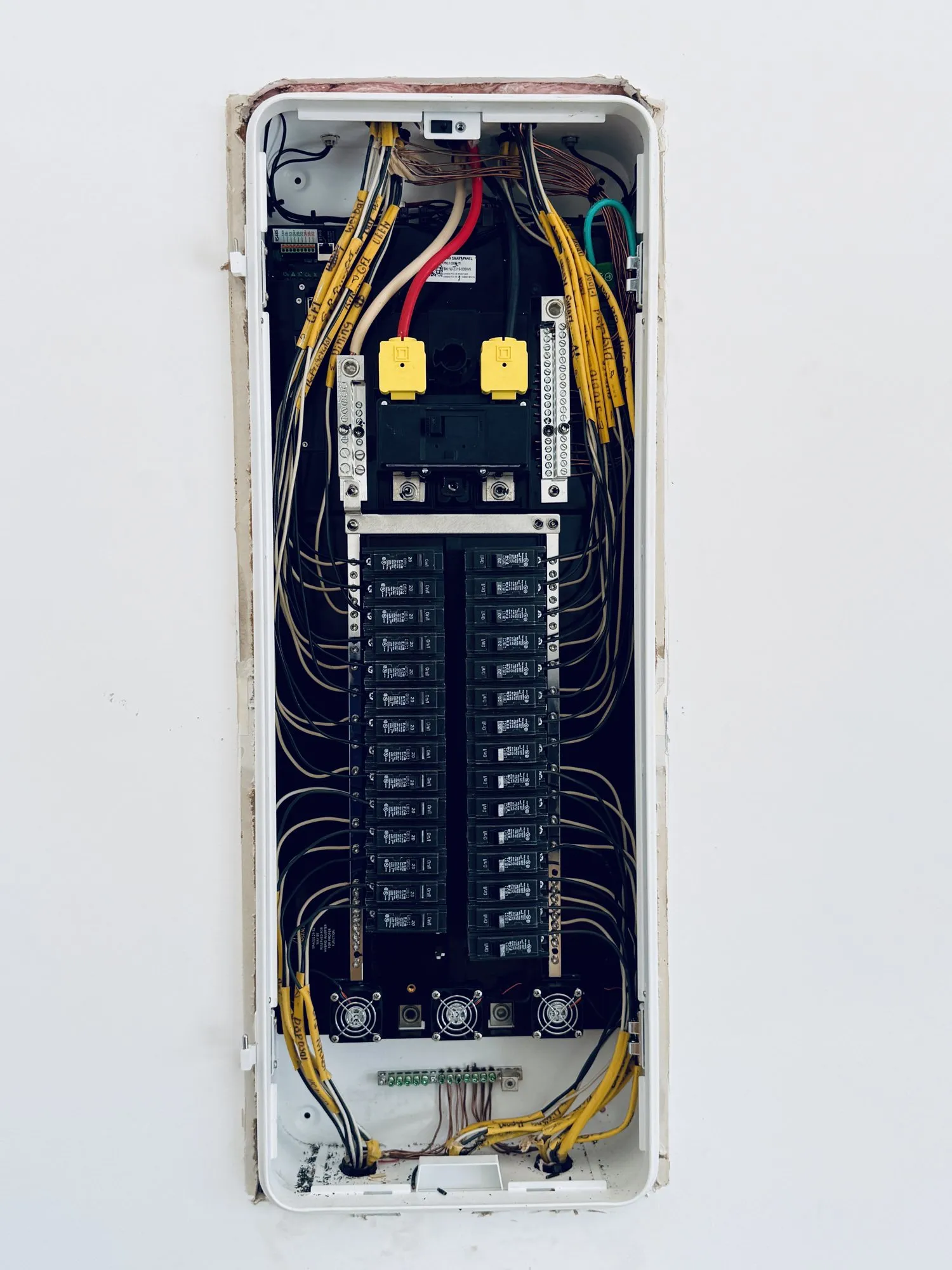
What failed: When a breaker’s spring jaws lose grip on the panel’s metal busbar, electricity jumps across a microscopic air gap, eating craters into the busbar and baking the breaker shell. In Federal Pacific Stab-Lok and Zinsco panels, aluminum bus corrosion and documented breaker jamming make overheating far more dangerous because the breaker can weld itself straight onto the busbar.
Where it shows up: Remodeled kitchens, attic junction boxes, or panels flagged during pre-purchase home inspections.
What failed: Stuffing two different wire gauges under a single breaker screw (“double-tapping”) or twisting four copper wires loosely under an undersized wire nut leaves one conductor arcing under load. We routinely catch and permanently correct these hidden hazards during home inspection electrical repairs before families move into a newly purchased home.
Where it shows up: Covered patios, pool equipment pads in Lakeway and West Lake Hills, and weathered exterior breaker panels after Central Texas storms.
What failed: Cracked bubble covers or unsealed conduit hubs let rainwater track across energized brass terminals or corroded breaker lugs, creating conductive carbon tracking that sizzles and smells acrid hours after the rain stops.
What a Permanent Repair Looks Like (vs. a Dangerous Quick Swap)
Never let anyone simply screw a new $3 receptacle onto wires that have already turned black or purple from heat. Overheated copper becomes annealed (soft and spongy, unable to hold screw torque), and heat-baked PVC insulation cracks off inside the box the moment the outlet is pushed back into the wall.
When a DC Electric licensed technician opens an overheated outlet or panel:
- We inspect conductor health back past the heat zone — trimming away annealed metal, re-insulating or pulling fresh slack, or installing code-compliant pigtails and deeper boxes where needed.
- We test upstream and downstream junctions on the same circuit so a second weakened backstab three feet down the wall isn’t left behind.
- If the scorching is on a panel busbar, we show you the exact bus pitting in person and walk through flat-rate electrical panel replacement or 200A upgrade options — never replacing just a breaker onto a burned bus finger (which guarantees repeat failure).
DC Electric, Inc. (TECL #38552) performs root-cause residential electrical diagnostics and code-compliant repairs across Greater Austin. Every repair carries our 5-year workmanship warranty, and every electrical panel replacement carries our 10-year workmanship warranty.
Smell something off near an outlet, switch, or breaker box? Flip that breaker OFF and call (512) 954-4782 or book online 24/7. We offer 24/7 phone and online booking for everyone across Greater Austin, and 24/7 emergency electrical service for existing customers.
If you're in doubt, call DC Electric out.
Whatever the electrical question, a Lead Technician comes out, does a thorough check, and gives you a clear course of action with a guaranteed repair or fix — and an upfront flat-rate price before any work begins.
What to do immediately when you smell a burning or fishy electrical odor
- Check for smoke, flame, or an actively roaring panel first. If you see smoke curling from a wall plate, active sparking, or a main breaker panel cover that is hot or roaring, do not touch the panel — get everyone outside and call 911.
- Shut off the circuit at the breaker panel before touching any cord. If the odor is localized to a room outlet, switch, or light fixture with no smoke, go to your breaker panel and flip that room's breaker firmly to OFF before unplugging any softened or melted plug.
- Leave the breaker OFF — even after the smell disappears. Once current stops flowing, the charred plastic cools down in 15–20 minutes and the odor fades. That does not mean the problem resolved itself; turning the breaker back on restarts heating on carbonized insulation.
- Feel nearby wall plates gently with the back of a dry hand (only after power is off). Noting which outlet, switch, or appliance cord was warm helps your electrician go straight to the damaged junction box.
- Have a licensed electrician inspect the wire insulation behind the box. Swapping a $3 outlet onto heat-brittled copper and charred insulation two inches inside the box leaves a hidden arc fault ready to fail again.
- Visible smoke, glowing embers, or flame coming from an outlet, switch, attic, or breaker panel
- A breaker panel door that feels hot to the touch or makes a loud frying, arcing, or roaring sound
- Melting insulation or smoke at your exterior utility meter base or overhead service drop
- A burning odor spreading through walls or ceiling vents that continues after flipping the main breaker off
We believe your home should have safe, reliable electrical wiring to protect your family's well-being.
Common questions
Why does an overheating outlet or circuit breaker smell like dead fish?
Why didn't my circuit breaker trip when the outlet melted?
Can a space heater or Level 1 plug-in EV cord melt a normal wall outlet?
Is it safe to just replace a scorched outlet myself if the wire still reaches?
Could a burning smell at my panel mean I have a hazard-flagged breaker box?
Does DC Electric offer emergency service if I have a burning electrical smell?
Standing By to Take Your Call
Book online any time, or give us a call and we'll get you scheduled — existing customers reach us 24/7.