On this page +

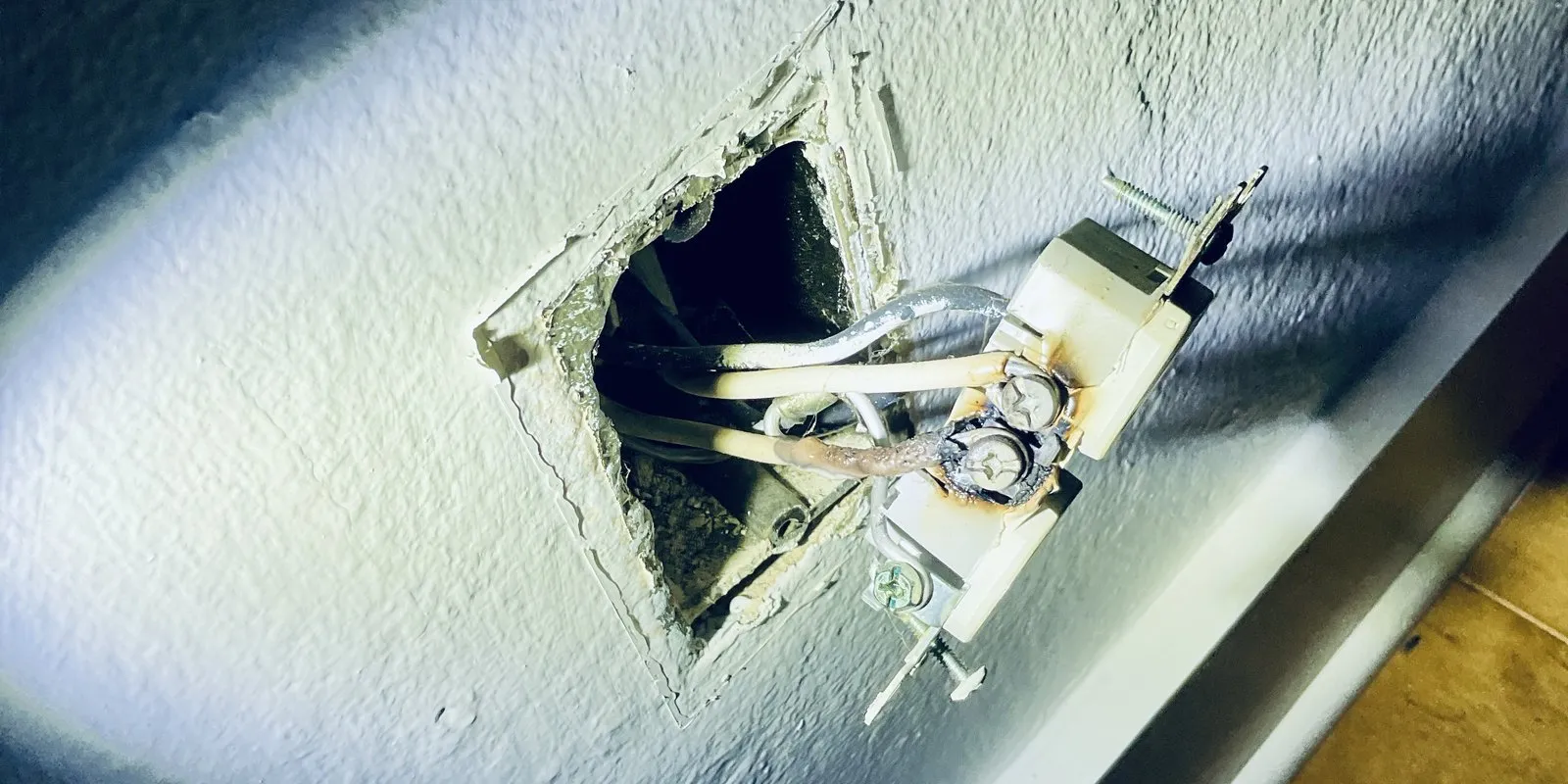
Flickering lights fall into two completely different categories depending on how much of your house is flickering. If it's one bulb or one dimmer zone, the culprit is almost always benign: a loose bulb, an incompatible older dimmer fighting LED drivers, or a worn wall switch. If lights flicker across an entire room when an outlet is used — or across your whole house, especially if some lights surge brighter while others dim — stop guessing. That points to a high-resistance loose connection, 1965–1974 aluminum branch wiring, a failing panel bus, or a loose utility service neutral that can destroy appliance circuit boards and overheat behind drywall.
Need a licensed Austin electrician? Explore our Austin Electrical Repair service, permits & upfront pricing →
Why LED bulbs turned your house into an early-warning electrical meter
Ten years ago, a slightly loose wire nut or a mild voltage dip in an Austin home could hide for years because old 60-watt incandescent filaments stayed glowing red-hot right through brief power fluctuations. Modern LED bulbs and wafer fixtures don’t have a glowing tungsten wire — they run on micro-electronic drivers that respond to voltage changes in milliseconds.
That means flickering LEDs can be as harmless as a $65 incompatible wall dimmer — or they can be the earliest warning your home gives you before a loose wire overheats and causes a burning smell at an outlet or breaker panel.
The secret to knowing whether your flicker is an easy fix or an urgent hazard is mapping where it happens. Here are the six real causes our electricians diagnose across Greater Austin every week, ranked from harmless to urgent.
One flickering dimmer zone is usually a control mismatch; whole-room or whole-house flickering is a connection problem. And if one room surges brighter while another dims, treat it as an urgent loose-neutral hazard.
Need a licensed technician to load-test your circuits and give you a straight answer? See our electrical troubleshooting & repair service in Austin.
The 6 Causes of Flickering Lights in Austin Homes
What it looks like: Only one switch zone flickers, shimmers, “popcorns” on with a delay, or buzzes softly — especially when dimmed below 50%.
Why it happens: Many Austin homes upgraded to LED bulbs or recessed LED lighting while leaving the original 2005-era incandescent dimmer on the wall. Old triac dimmers require a minimum 40W–60W resistive load just to hold their internal timing steady; six modern LEDs drawing 48 watts total confuse the dimmer’s phase cut. Swapping to a manufacturer-matched Lutron LED+ or ELV dimmer and dialing in the low-end trim wheel fixes it permanently.
What it looks like: All the lights in one bedroom, living room, or kitchen nook flicker randomly, or blink whenever someone walks across the floor, bumps a plug, or runs a vacuum in that room.
Why it happens: In fast-built subdivisions across Round Rock, Cedar Park, Pflugerville, and South Austin, builders routinely used 14-gauge push-in “backstabs” on the back of $1 receptacles instead of wrapping copper tightly under brass side-screws. Power daisy-chains through three or four outlets before reaching your light switch or chandelier and ceiling fan. After years of heating and cooling cycles, one tiny spring blade loses tension and micro-arcs every time current flows through the room.
What it looks like: Every light in the house dips for half a second right when the central air conditioner kicks on at 4:00 PM in July, then immediately steadies.
Why it happens: A 3.5-ton to 5-ton AC compressor pulls 80 to 115+ locked-rotor amps for a split second at startup. On older 100-amp central-Austin homes (or crowded 150-amp panels), that momentary draw sags voltage across the entire busbar. If the dip is brief and subtle, an HVAC soft-start or dedicated circuit evaluation helps; if the dimming drags out for 2–3 seconds or just started recently, we inspect your main lugs and electrical panel capacity for heat damage.
What it looks like: Intermittent flickering, warm switch plates, or outlets dropping in and out in an Austin ranch or split-level built between roughly 1965 and 1974 (common across Barton Hills, Northwest Hills, Allandale, West Lake Hills, Oak Hill, and early Round Rock).
Why it happens: Single-strand aluminum branch wire expands and contracts ~30% more than brass screws under load, creeping loose over time and forming resistive aluminum oxide inside wire nuts and light junction boxes. Never ignore flickering in an aluminum-wired home — CPSC-recognized aluminum wiring remediation with AlumiConn lugs permanently stabilizes those terminations without tearing open your drywall.
What it looks like: Multiple circuits on one side of the house flicker, a breaker feels warm to the touch, or you hear a faint crackle at the breaker box when the dryer, oven, or EV charger turns on.
Why it happens: Outdoor panels baking on west-facing Austin brick walls — and high-failure Federal Pacific Stab-Lok or Zinsco panels — develop pitted, oxidized busbar fingers where the breaker clips onto the main power rail. When heavy summer load pulls across a pitted bus stab, voltage stutters across every lighting circuit sharing that phase leg.
What it looks like: When a 120V load (like a microwave, toaster, hair dryer, or washing machine) kicks on, lights in one part of the house dim noticeably while lights in another room surge dangerously bright.
Why it happens: Your home receives 240 volts split into two 120V legs balanced around a grounded neutral conductor. In Central Texas, live oak branches rubbing an overhead service drop — or expansive clay soil shifting an underground lateral conduit — can loosen or break that neutral wire. Without the neutral holding both legs at 120V/120V, turning on a 12-amp microwave skews the house to 85V on one half and 155V on the other. Overvoltage at 155V burns out furnace boards, Sub-Zero refrigerators, smart TVs, and even sacrifices plug-in power strips (adding whole-house surge protection helps against transient spikes, while fixing the loose neutral itself is mandatory for sustained overvoltage).
How a Real Load-Tested Diagnosis Beats Guesswork
Guessing at flickering lights gets expensive fast — homeowners swap bulbs, buy three different dimmers, and still watch the kitchen lights blink every evening because the real culprit was a loose neutral lug in the exterior meter can 40 feet away.
When a DC Electric Lead Technician arrives, we put a true-RMS meter and load tester on your panel and affected circuits to measure voltage drop under real load on both phases and the neutral. Within minutes, we can show you whether the resistance sits in a $0–low-cost device splice, your breaker bus, or the utility company’s overhead tap (and if it’s on Austin Energy, Oncor, or PEC’s side of the weatherhead, we document the exact voltage readings so their trouble truck fixes it promptly at zero utility charge to you).
All DC Electric troubleshooting and repairs are performed by licensed Texas residential electricians (TECL #38552), with upfront written flat-rate pricing and our 5-year workmanship warranty on all electrical repairs (10-year workmanship warranty on panel work).
Tired of wondering what’s flickering behind your walls? Call (512) 954-4782 or book online 24/7 anywhere in Greater Austin — with 24/7 phone and online booking for everyone, and 24/7 emergency electrical service for existing customers.
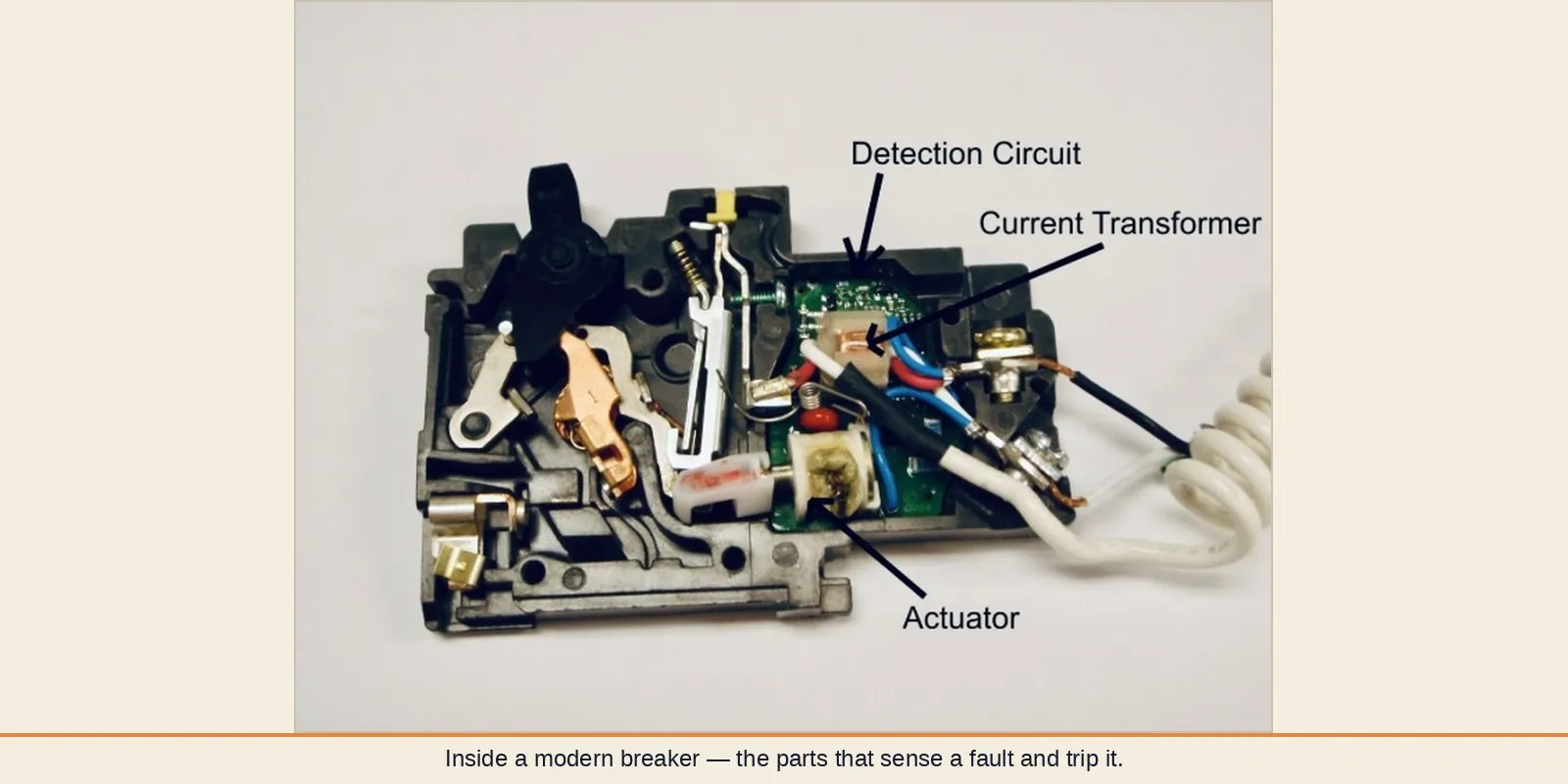
If you're in doubt, call DC Electric out.
Whatever the electrical question, a Lead Technician comes out, does a thorough check, and gives you a clear course of action with a guaranteed repair or fix — and an upfront flat-rate price before any work begins.
How to narrow down flickering lights in 2 minutes (without touching wiring)
- Count how many rooms are affected. One fixture points to the bulb, socket, or switch. One full room points to a shared branch circuit splice or backstabbed outlet. Multiple rooms point to your main panel or utility drop.
- Watch whether any lights get brighter instead of dimmer. Turn on a microwave, hair dryer, or toaster and watch a light on a different circuit. If one room gets brighter while another dims, you likely have a failing main service neutral — call immediately.
- Test the dimming range if the lights are LEDs. Slide the dimmer to 100% full brightness. If the strobing only happens below 40% brightness, your LEDs are fighting an older incandescent dimmer or uncalibrated low-end trim.
- Notice whether it only dips for a split second when central AC kicks on. A brief half-second dip when a 4-ton AC compressor starts in 102°F Austin heat is common inrush sag; sustained dimming for several seconds means undersized capacity, weak capacitor/compressor, or corroded lugs.
- Note your Austin home's build decade. Homes built 1965–1974 frequently have solid aluminum branch wiring; 1950s–1980s homes often still run original Federal Pacific or Zinsco panels where busbar arcing first shows up as flicker.
- Lights in one part of the house surge brighter while another room dims when an appliance runs (classic loose or open service neutral)
- Any buzzing, sizzling, warm faceplate, or burning / fishy smell near a switch, outlet, or breaker panel
- Whole-house flickering after high winds or oak branches rub your overhead Austin Energy, Oncor, or PEC service drop
- Flickering in a 1965–1974 home with aluminum wiring or a Federal Pacific (Stab-Lok) / Zinsco breaker box
We believe your home should have safe, reliable electrical wiring to protect your family's well-being.
Common questions
Is it normal for my lights to dim for a second when the AC turns on in Austin?
Why do my new LED bulbs flicker or buzz when my old bulbs didn't?
What does it mean if some lights get brighter when the microwave or dryer starts?
Can a loose outlet in a bedroom cause the ceiling lights to flicker?
Should I call Austin Energy / Oncor / PEC or an electrician first for whole-house flickering?
How do DC Electric technicians find a hidden flickering wire without tearing open walls?
Standing By to Take Your Call
Book online any time, or give us a call and we'll get you scheduled — existing customers reach us 24/7.