On this page +
One dead outlet — while the rest of the room hums along — comes down to one of five causes, and you can rule out the first three in about five minutes with nothing but a lamp. In order of likelihood: a tripped GFCI somewhere else in the house that this outlet sits downstream of, a wall switch that controls half the outlet (top dead, bottom fine — builders wire lamp circuits this way), a breaker that tripped without looking tripped, a worn or failed receptacle whose connection finally let go, or — in Austin homes from roughly 1965–1973 — aluminum wiring loosening at a connection. Run the sequence below. Still dead after that? Stop there — the failure is at a connection, and that part is our job.
First — make sure it’s one outlet, not one room
The lamp went dark, so you tried your phone charger in the same outlet. Nothing. But the ceiling light is on, the TV three feet away is playing, and every other outlet in the room checks out. One dead outlet, everything else fine.
Confirm that before anything else, because it decides which checklist you follow. Plug your lamp into the outlets around the dead one. If several are out — or the whole room is — you have a different problem with a different set of causes: read Power’s Out in One Room instead. If it really is just this one outlet — or just half of it — stay right here. Most of the time this is a five-minute diagnosis, and the first three suspects don’t involve anything actually being broken.
A single dead outlet usually isn't broken — it's interrupted: a tripped [GFCI in another room](/blog/gfi-vs-gfci/) upstream of it, a wall switch you didn't know about, or a hidden breaker trip. The genuinely failed outlet is suspect number four, not number one.
A very Austin example
A 1997 two-story in Circle C. New owners, moving-day energy, the TV console goes against the long living-room wall. The outlet behind it: top plug dead, bottom plug fine. The sellers never mentioned a problem, and the home inspector’s plug tester passed every outlet in the house. Everyone’s telling the truth.
Living rooms of that era mostly don’t have ceiling lights — so the builder wired the top half of that outlet to a switch by the patio door, the one the new owners flipped twice on day one and wrote off as doing nothing. It was doing plenty: switching the half-outlet a floor lamp was meant to live on. One flip, and the “broken” outlet was never broken at all.
That’s suspect number two on the list below. Number one is even sneakier.
The five usual suspects — in order
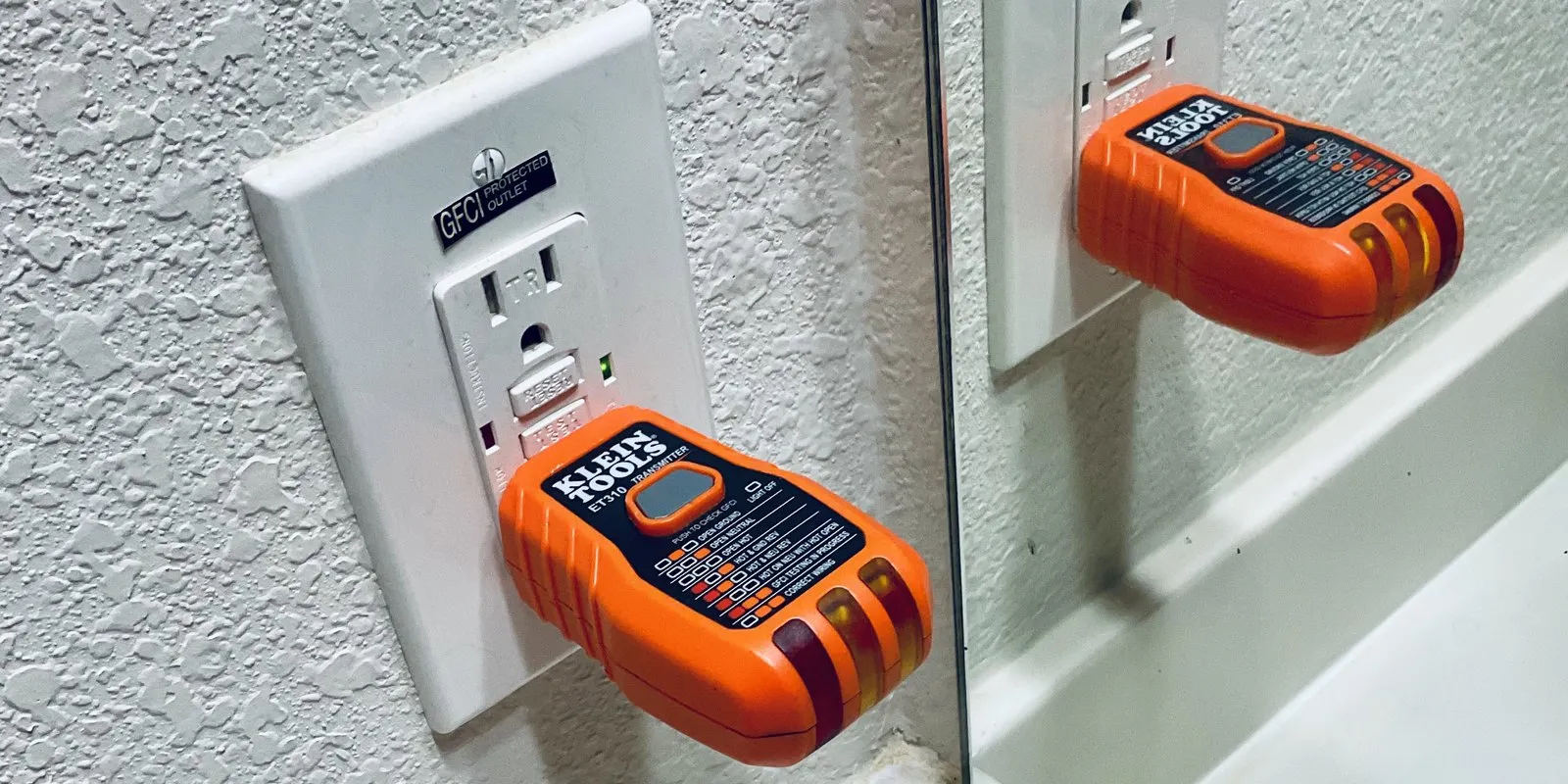
The most common answer, and the one you can’t see from the dead outlet: it’s wired downstream of a GFCI in another room, and that GFCI tripped. One GFCI protects every ordinary outlet after it on the circuit, and those chains ignore room boundaries — a garage or bathroom GFCI quietly feeding a bedroom wall is classic builder wiring.
- Walk the whole house and press RESET firmly on every outlet with buttons: bathrooms, kitchen, laundry, garage, outdoors.
- An outdoor GFCI that tripped in a summer downpour is one of the most common causes we find in Austin.
Top plug dead, bottom plug fine? In rooms without a ceiling light, builders wire half the outlet to a wall switch so a lamp can come on at the door — the tab joining the two halves is snapped off on purpose. Half the outlet is switched; the other half is always on.
- Plug your lamp into the dead half and flip every switch in the room — especially the one that “does nothing.”
- Rearranging furniture is the classic trigger: the lamp moves off the switched half, something else takes its place, and a perfectly healthy outlet gets reported dead.
- It can be the top or the bottom half, depending on how it was wired.
A tripped breaker rarely flips to OFF — it rests in the middle, looking normal. And the dead outlet doesn’t have to share a circuit with the room around it: kitchens run separate small-appliance circuits, and bedrooms and living rooms often straddle two. One outlet can go quiet while everything around it stays lit.
- Push the suspect breaker — and any that aren’t sitting flush — firmly to full OFF (you’ll feel the click), then back to ON.
- Holds? Solved — though it’s worth asking why it tripped: Why Does My Breaker Keep Tripping?
- Trips again instantly? That’s a fault. Leave it off and call.
A receptacle is a mechanical part: spring-metal contacts gripping brass, heating and cooling under every load. It dies two ways. Worn contacts — if plugs have been sliding out of this outlet under their own weight for years, the grip is gone, and a loose grip arcs, heats, and eventually goes dead. Or a back-stabbed connection let go — builder-grade outlets are often wired through push-in holes in the back, a spring pressing a bare wire at a single point, and heat cycling relaxes that spring until one day the circuit simply opens. If the dead outlet is the last one on its run, the failure usually lives in its own box.
Austin built fast in that window, and much of it was wired with aluminum branch circuits. Aluminum expands and contracts more than copper with every heat cycle, so connections slowly work loose — outlets turn flaky, then intermittent, then dead. One dead outlet in an aluminum-era house is a symptom; two or three acting up is a pattern, and these connections fail hot. This is the one suspect where we’d skip the rest of the checklist and go straight to an evaluation of the circuit.
Quietly dead vs. actively failing
A connection that fails makes heat before it makes silence. An outlet that went quietly, alone, and stays cool is usually a small, contained repair. But warmth at the faceplate, a crackle or buzz, a hot-plastic smell, or scorch shadows around the slots mean the failure is still live — those are call-now signs, not weekend-project signs. And an outlet that sparks when you plug something in is the same failure earlier in its story — we cover that one in Outlet Sparks When Plugging In.
Why the visit starts at the panel, not the faceplate
Five causes, one identical symptom — from the couch, a tripped GFCI two rooms away looks exactly like a connection cooking inside the box. So we don’t guess. A DC Electric Lead Technician traces the circuit with a meter, finds which link opened, and opens the right box — then checks the rest of the run, because a back-stabbed connection that let go is rarely the only tired one on the circuit. Most single-outlet failures are diagnosed and repaired in a single visit.
If your five minutes didn’t solve it — or the outlet is warm, buzzing, or scorched — that’s our cue. Schedule my outlet diagnostic — book online or call (512) 954-4782. We serve homes across Greater Austin, and existing customers can reach us 24/7.
If you're in doubt, call DC Electric out.
Whatever the electrical question, a Lead Technician comes out, does a thorough check, and gives you a clear course of action with a guaranteed repair or fix — and an upfront flat-rate price before any work begins.
How to find why one outlet stopped working
- Test both halves with a lamp you trust Plug a lamp you know works into the top plug, then the bottom. If one half works, you're likely looking at a switched half-hot outlet, not a broken one.
- Flip every wall switch nearby Leave the lamp in the dead half and flip each switch in the room — especially any switch that has never seemed to do anything. If the lamp lights, that's your answer.
- Press RESET on every GFCI in the house Bathrooms, kitchen, laundry, garage, and outdoor outlets. A tripped GFCI in any of them can kill an ordinary outlet rooms away.
- Reset the breaker properly Push the suspect breaker to full OFF — you'll feel a click — then firmly back to ON. A tripped breaker usually rests in the middle and looks normal.
- Still dead? Stop and call The failure is at a connection, either inside that outlet's box or upstream of it. Leave the receptacle in the wall — this is the part that needs a meter.
- The outlet or its faceplate is warm to the touch
- Discoloration or scorch marks around the slots
- Any crackle, buzz, or hot-plastic smell at the outlet
- The breaker won't hold — it trips again right away
- Your home dates to roughly 1965–1973 and more than one outlet acts up
- You're tempted to pull the receptacle out of the box to take a look
We believe your home should have safe, reliable electrical wiring to protect your family's well-being.
Common questions
Why does the top plug work but the bottom plug doesn't?
My outlet stopped working but no breaker tripped — why?
Can a GFCI in the bathroom or garage kill an outlet in a different room?
Is one dead outlet dangerous, or can I ignore it?
Can I just replace the dead outlet myself?
Standing By to Take Your Call
Book online any time, or give us a call and we'll get you scheduled — existing customers reach us 24/7.